A Manila interior design company works in a setting where heat, moisture and intense seasonal rain affect the way interiors age. That does not mean every surface must look utilitarian. It means the substrate, detailing, coatings and maintenance plan should support the aesthetic choice. Surface appearance alone is not enough to predict long-term performance.
Choose finishes and joinery for humidity, air-conditioning cycles, cleaning routines and daily wear. Start with a defined brief, written responsibilities and a realistic review process rather than choosing by appearance alone.
Start with moisture sources and building systems
Before specifying a new cabinet or wall finish, identify potential leaks, condensation zones, plumbing exposure and poorly ventilated corners. Air-conditioning can create temperature differences that encourage condensation in the wrong detail. Where water risk exists, appropriate waterproofing, drainage and access for maintenance come before decorative cladding. Any observed dampness needs diagnosis rather than concealment.
Compare materials by use, not fashion
For kitchens and food-service spaces, consider cleanability, abrasion and heat exposure. For lobby floors, consider slip resistance, impact and the cleaning equipment that will be used. Joinery boards, veneers, solid wood and laminates react differently to moisture; edge sealing, hardware quality and installation gaps are important. Ask suppliers for product data and recommended applications rather than accepting a generic statement that a finish is “waterproof.”
Treat indoor air quality as part of selection
Adhesives, coatings and composite boards can affect indoor air quality. Review available low-emission certifications and ensure suitable ventilation during installation and curing. A material with a sustainability label may still be inappropriate for a heavy-wear application. Evaluate embodied impact together with durability, repairability and replacement frequency to avoid premature disposal.
Design for repair without losing the visual concept
Removable access panels, replaceable upholstery, standard hardware and durable corners extend service life. Ask how the surface will be cleaned and what happens if one panel is scratched. For commercial properties, request a sample maintenance schedule before bulk procurement. Small decisions about access, edge protection and spare finishes can protect the atmosphere the design team worked to create.
A practical project scenario
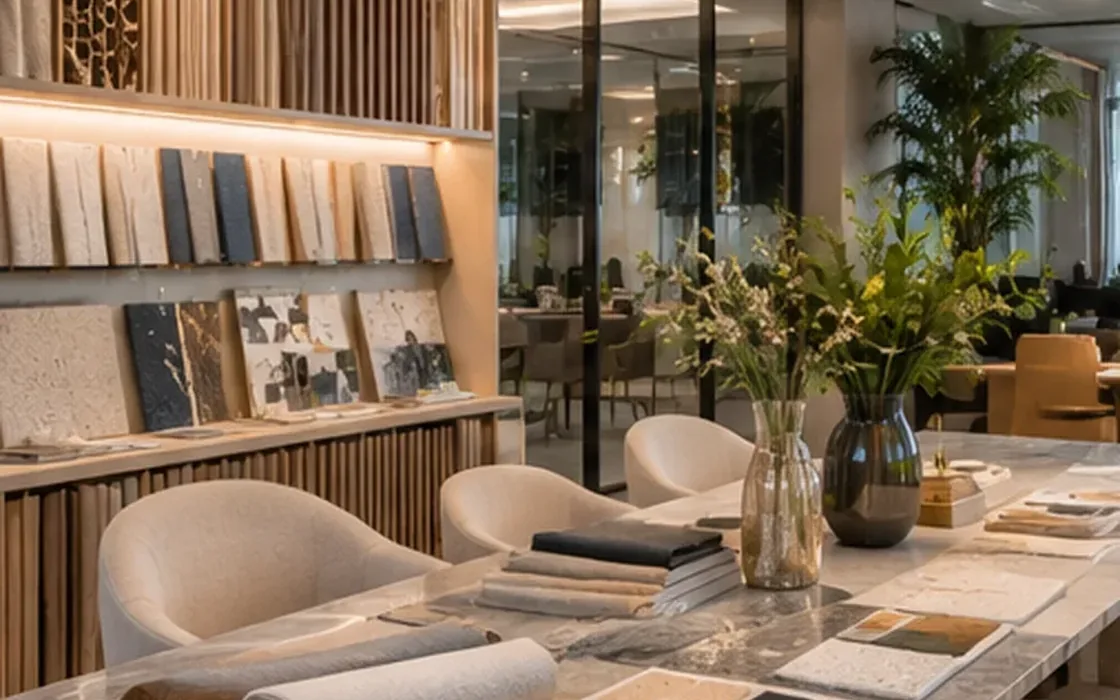
A wall finish looks ideal in a showroom but would be installed near a moisture-prone service space. A technical sample review and maintenance discussion lead to a more suitable finish without losing the desired color palette.
How to apply this guidance
At the next project review, begin by asking the team to inspect moisture issues before covering walls or floors. Then make time to review edge sealing, substrate and installation details. These are decisions that should be recorded in the brief or specification, not left as assumptions in a mood board. Before approving procurement or construction, check supplier care, warranty and emissions documents and choose finishes that can be cleaned and repaired locally. Give one person responsibility for documenting the agreed outcome, note open questions and update the programme if a decision changes. This process lets the design remain creative while giving everyone a clear basis for implementation.
Client decision checklist
- Inspect moisture issues before covering walls or floors
- Review edge sealing, substrate and installation details
- Check supplier care, warranty and emissions documents
- Choose finishes that can be cleaned and repaired locally
Frequently asked questions
Are natural materials unsuitable for Manila interiors?
No. Natural materials can work when selected and detailed for the actual humidity, use and maintenance conditions.
Is a low-VOC claim enough to choose a finish?
It is one consideration; verify available documentation alongside durability, cleanability and suitability for the proposed application.